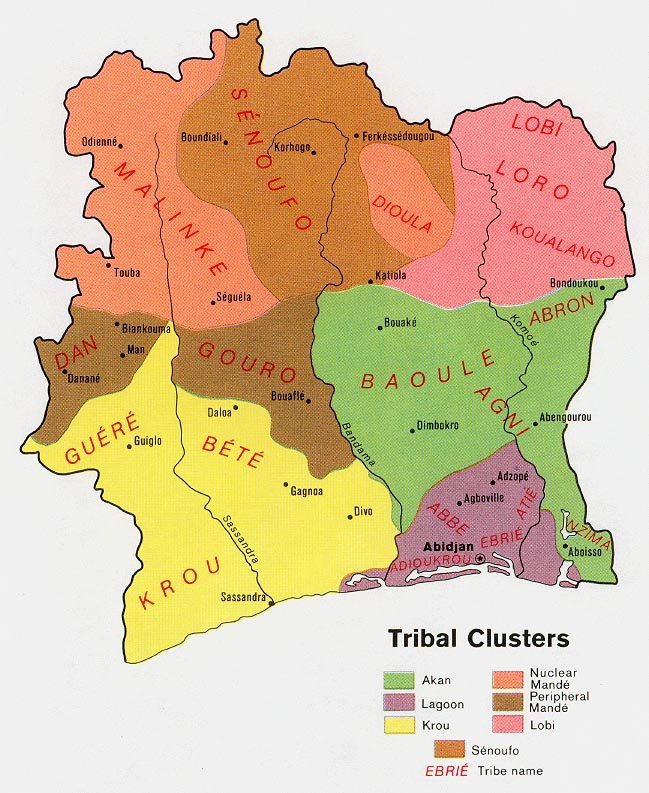

The Yaure people live in central Côte d'Ivoire, where their villages stretch across the savanna and forested regions near the Bandama River. The Yaure speak the Yaure language, which belongs to the Mande language family. Depending upon their proximity to their neighbors, the inhabitants of Yaure villages are either entirely Baule or Mande speaking. French, the national language, also reaches their communities through schools and commerce. Despite centuries of pressure from larger neighbors, the Yaure have maintained their distinct identity, language, artistic traditions, and social structures while interacting with neighboring groups through trade and shared festivals. Their history includes a legacy of skilled woodcarving, especially in the creation of masks used in community ceremonies. The Yaure value their oral traditions, passing down stories and customs that shape their identity.
The Yaure are divided into three main groups living in approximately twenty villages. A council of elders leads each village. Villages are generally associated with one clan, and each family lineage traces its roots to a particular ancestor. Yaure families often live in extended households, with several generations sharing daily life and responsibilities. Elders carry significant authority, guiding both community decisions and the observance of traditional customs.
Farming anchors daily life. Like many peoples in central Côte d'Ivoire, the Yaure cultivate food crops such as yams, cassava, maize and plantains to feed their families, while also participating in the broader regional cash economy. The rivers and forest that surround their territory provide additional resources, and local markets connect Yaure communities to the wider world of trade.
Woodcarving holds a special place in Yaure communal life. The Yaure adorn a variety of everyday objects with figurative representations, but it is their masks that reveal their artistic abilities. These masks are not merely decorative — they serve a living religious and social function, particularly during significant community events. Masked dances play a central role in festivals, serving both social and spiritual purposes. Storytelling, drumming, and singing help preserve history and teach values. The Yaure use drums to also announce the death of a chief. Funerals and communal ceremonies mark the rhythm of village life, bringing families and clans together and reaffirming shared bonds across generations. Daily rhythms follow the agricultural calendar, with work, worship, and rest woven into the fabric of life.
The Yaure people's religious identity reflects the broader patterns of central Côte d'Ivoire. Many Yaure identify with traditional beliefs, honoring ancestors and seeking guidance through rituals and ceremonies. They believe their masks are embodiments of the Yu spirit, an extremely dangerous spirit that can harm humans but can also ensure their survival. Cases of death that jeopardize the social order are the principal occasions for an appearance of masqueraders. By means of their dance, they restore the social equilibrium of the community and accompany the deceased into the ancestral realm.
Small Yaure statuettes are carved to protect and help in difficult situations. These objects reflect a worldview in which the spiritual realm stays in constant conversation with the living and maintaining that relationship requires ongoing attention and care.
They have Christian mission activity, and some awareness of the gospel may exist in or near Yaure communities through neighboring peoples and regional media. In some areas, Christianity and Islam have influenced local practices, and some Yaure blend these faiths with their traditional worldview. The Yaure respect their elders and spiritual leaders, who play a key role in community life. Scripture is available in a language they understand, and churches and mosques serve as centers for worship and teaching in some villages. The gospel continues to reach the Yaure, and some believers actively participate in church life and outreach.
The Yaure people face ongoing challenges in both spiritual and physical areas. Many villages have limited access to clean water, healthcare, and education. Roads and infrastructure can be difficult, especially during the rainy season. Young people need both spiritual foundations and practical pathways to flourish. The Yaure need to hear the gospel clearly, in a way that speaks to their language and their worldview. Animism places great weight on managing fear — fear of dangerous spirits, fear of disrupted social order, fear of death without proper ceremony. The good news of Jesus Christ speaks directly into that fear, offering reconciliation with God and freedom from the power of spirits through his death and resurrection.
The Yaure also need gospel workers who will invest in learning their language and culture, building relationships over time rather than passing through quickly. And as a small people group living between larger, more dominant neighbors, the Yaure also need their distinct identity and language to be honored — including by those who bring them the gospel. Access to Scripture and Christian resources in their heart language remains important for spiritual growth and outreach. Emerging Yaure Christian leaders need encouragement and training to shepherd their communities and share the hope of Christ with others.
Pray for the spread of the gospel among the Yaure and for open hearts to God's word.
Ask God to raise up leaders who will disciple others within and outside their ethnic community.
Intercede for improved access to clean water, healthcare, and education in Yaure villages.
Pray that the Yaure church will become a strong force for the gospel among neighboring peoples.
Scripture Prayers for the Yaure in Côte d'Ivoire.
| Profile Source: Joshua Project |